

Septic Problems Often Give You Warning Before a Backup
A septic system usually does not go from normal to a major backup without any warning. For homeowners in Lexington, South Carolina, the key is noticing changes in the plumbing or yard before the problem becomes disruptive. A tank that is overdue for service can allow solids to build up and reduce the room available for wastewater, while a stressed drain field can create symptoms that look similar to a full tank.
South Carolina Department of Environmental Services guidance says most home septic tanks need to be pumped about every three to five years, although the right interval depends on tank size and the number of people using the system. That means the calendar is useful, but the condition of the system matters just as much.
1. Drains Are Slow in More Than One Part of the House
One slow sink can be a local plumbing clog. Slow drainage at several fixtures is more important. If tubs, showers, sinks, and toilets all seem to be draining more slowly than usual, the restriction may be farther downstream where the house plumbing connects to the septic system.
Do not assume that pumping will solve every slow-drain problem. A plumber or septic contractor may need to determine whether the cause is a blocked line, a full tank, an effluent-filter issue, or a drain-field problem.
2. Toilets or Drains Begin Gurgling
Gurgling sounds can happen when air is being displaced through the plumbing because wastewater is not moving normally. When the sound is isolated to one fixture, the cause may be a local plumbing issue. When gurgling happens throughout the home along with slow drainage, it is a stronger reason to have the septic system evaluated.
Pay attention to when the sound occurs. Gurgling after a toilet flush, shower, or washing-machine discharge can help a service professional understand how the system reacts to a larger volume of water.
3. Sewage Odors Show Up Indoors or Outside
A persistent sewage smell is not something to ignore. Odors may develop near plumbing fixtures, the septic tank, or the drain field when wastewater is not being contained or treated as intended. The odor alone does not prove the tank is full, but it is a useful warning that the system should be checked.
If the smell is strong or accompanies a backup, reduce water use and contact a septic professional promptly. Avoid opening or leaning over a septic tank yourself because exposed tanks present serious safety hazards.
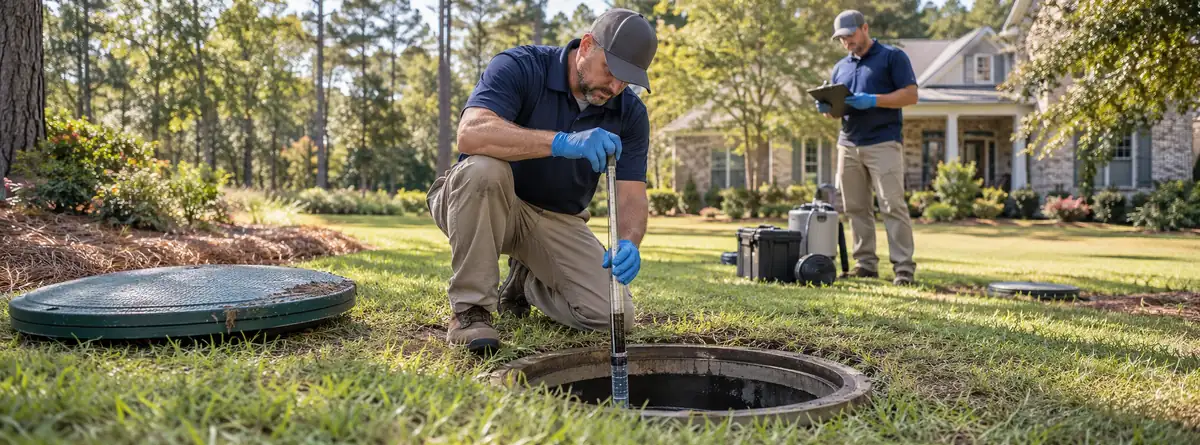
4. The Ground Near the Tank or Drain Field Is Soggy
Wet or spongy ground over the septic area can indicate that wastewater is reaching the surface or that the soil is no longer accepting effluent properly. This is especially important when the weather has been dry enough that ordinary rain or irrigation does not explain the moisture.
South Carolina guidance specifically identifies sogginess or ponding over the drain field as a condition worth investigating. A technician may inspect the tank, check liquid levels, and look for signs that the drain field is becoming overloaded.
5. Grass Is Unusually Green Over One Septic Area
A strip or patch of grass that suddenly becomes greener, thicker, or faster-growing than the rest of the lawn can sometimes point to excess moisture or nutrients below the surface. This is not always a septic failure, but it becomes more meaningful when it follows the tank or drain-field layout.
Look for patterns rather than one random healthy patch. If the greener area is paired with soft soil, odors, or slow plumbing, schedule an inspection instead of waiting for wastewater to surface.

6. You Cannot Remember the Last Time the Tank Was Pumped
If you bought the home without septic records or the last pump-out was several years ago, lack of history is itself a reason to get the system checked. SCDES recommends routine inspection every one to two years and pumping generally every three to five years, with more frequent service for some households and tank sizes.
A professional inspection can measure the sludge and scum layers rather than guessing from age alone. Once the tank is pumped, keep the service date with your property records so the next maintenance decision is easier.
7. Wastewater Begins Backing Up
A sewage backup is the sign that should move the situation from routine maintenance to urgent service. Stop unnecessary water use so you are not adding more wastewater to the system. Avoid contact with sewage because it can contain harmful pathogens, and keep children and pets away from affected areas.
A backup can be caused by a full tank, clogged piping, a blocked filter, or a failing drain field, so pumping should not be treated as an automatic diagnosis. The goal is to identify the cause and correct it before normal water use resumes.
Do Not Wait for All Seven Signs
You do not need to see every warning sign before calling for help. One strong symptom, several mild symptoms together, or an unknown pumping history can justify an inspection. Routine septic pumping is preventive maintenance; it is usually better to remove accumulated solids on schedule than to wait until the system is already backing up.
For homeowners in Lexington and surrounding South Carolina communities, Southland Septic LLC can help evaluate whether the tank is due for pumping and whether another part of the system needs attention. The most useful next step is a service decision based on the tank, household use, maintenance history, and what is happening on the property now.