Why Septic Checks Matter When Buying a Home
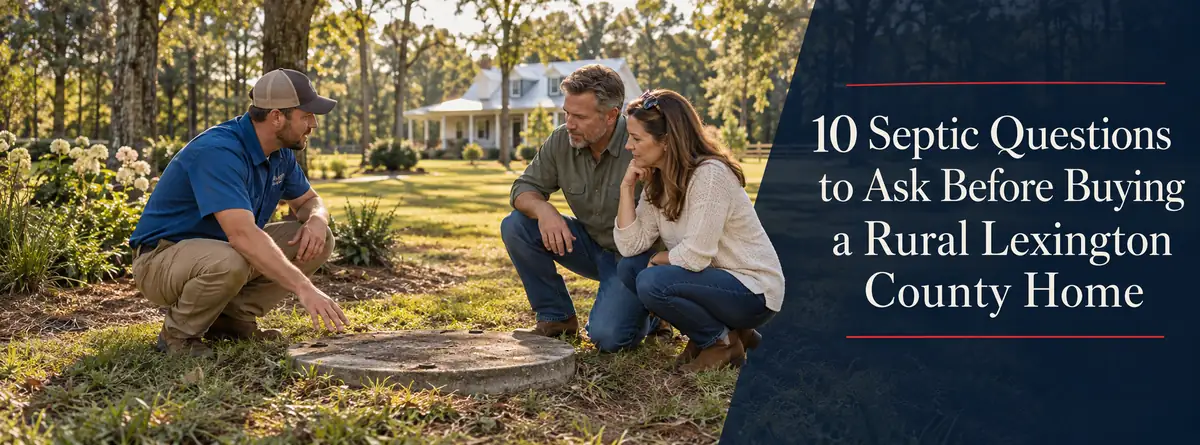
Buying a rural home in Lexington County often means enjoying more space and privacy, but it also usually means relying on a private septic system rather than public sewer. Since most of a septic system is hidden underground, buyers may not get a clear idea of its age, layout, maintenance, or current condition just by looking around during a tour.
Before you close on a property, it’s smart to ask direct questions and, if needed, set up a real-estate septic inspection. The point isn’t to predict everything that might happen—it’s to get a clearer picture of the system before you buy, while you still have time to dig deeper if something comes up.
1. Is the Home Actually on Septic, and Where Is the System?
Begin with the basics: find out if the home runs on a private septic system and ask where the tank and drain field are. On some older properties, the seller might only have a rough idea. If you can’t find the access point, having a professional septic tank locating service can save you from unnecessary digging and make the inspection process easier.
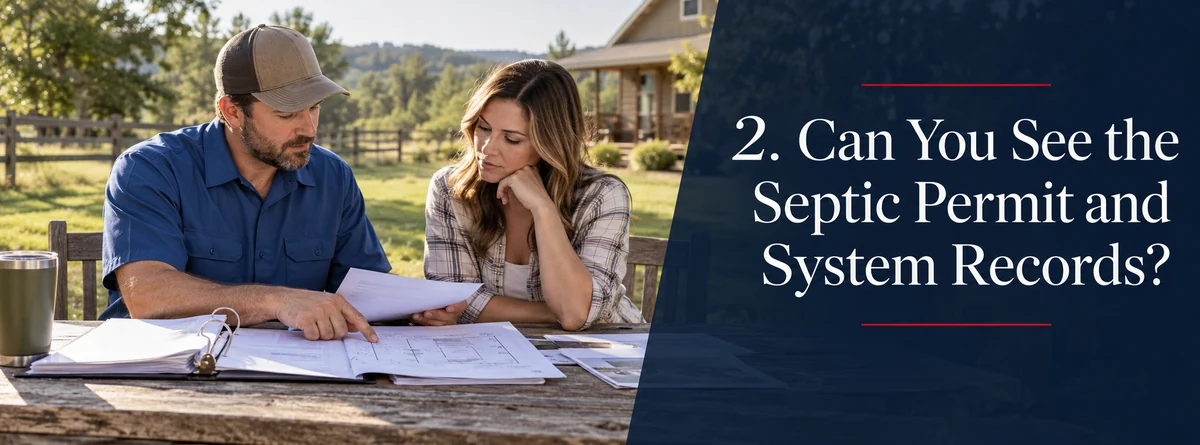
2. Can You See the Septic Permit and System Records?
Request any paperwork you can get—permits, installation records, system drawings, repair history, or past inspection reports. These documents can indicate how old the system is, its original layout, capacity, and what’s been fixed or changed over time. If records are missing, it doesn’t always mean there’s a problem, but it’s a good reason to have an expert take a closer look.
3. How Old Are the Tank and Drain Field?
Age isn’t the only thing that matters with a septic system, but it helps to know. Ask if any parts—like the tank, drain field, or pipes—have ever been replaced. It’s much easier to judge the condition of a system when you can see its maintenance and repair history.
4. When Was the Tank Last Pumped and Serviced?
Find out when the tank was last pumped and ask for any maintenance receipts. Regular pumping is a good sign, but getting a recent receipt isn’t the same as a thorough septic inspection. Make sure you know what work was actually done and what might have been left out.
5. Has the System Ever Backed Up, Needed Repair, or Had Drain-Field Problems?
Ask straight out about any issues in the past, like backups, slow drains, sewage smells outside, wet spots, repairs, or drain-field work. Just because something happened before doesn’t always mean the system is failing now. What’s important is knowing what happened, what was fixed, and if the problem came back.
6. What Size Home Was the Septic System Designed to Serve?
Septic systems are usually designed for a certain number of bedrooms or how much wastewater the house is expected to produce. This is important if the house was expanded or the layout changed. If you want to add bedrooms in the future, don’t assume the existing system can handle it. Make sure to check South Carolina’s requirements for your property and plans.
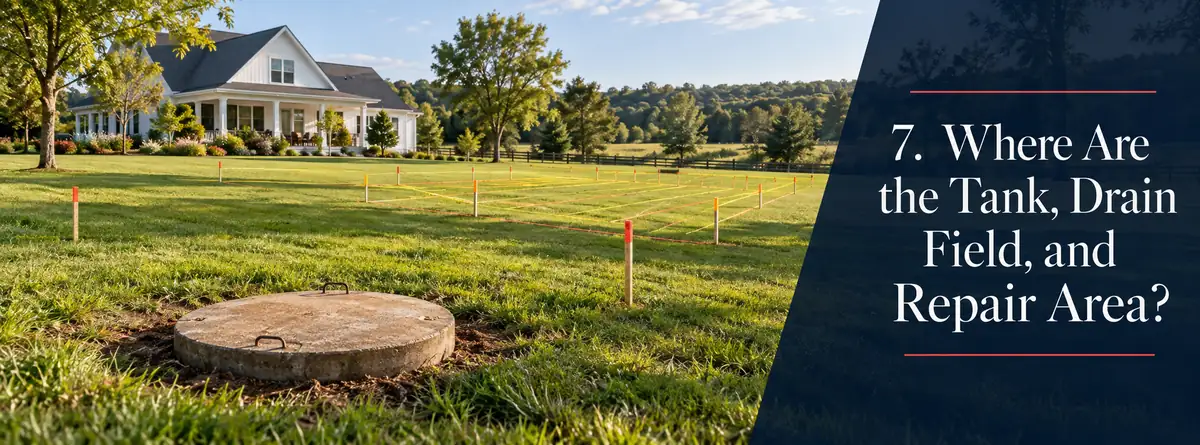
7. Where Are the Tank, Drain Field, and Repair Area?
Ask to see the approximate locations on the property, not just hear that they are "somewhere in the backyard." Knowing the layout can affect plans for a pool, addition, garage, driveway, fence, large landscaping project, or other construction. South Carolina site evaluations also consider setbacks and space for a repair area when a system is permitted.
8. Is Anything Built or Driven Over the Septic Area?
Look at how the property has been used. Heavy vehicle traffic, sheds, patios, additions, or other improvements near septic components deserve attention because access and soil conditions matter. Do not assume a structure is a problem solely because it is nearby; ask the inspector to explain the actual relationship to the tank and drain field.
9. Will the Seller Allow an Independent Septic Inspection Before Closing?
A septic system is important enough to evaluate separately from the general home inspection. Ask what the septic inspection will include, what components can be accessed, and whether pumping or locating should be coordinated with it. Scheduling early also gives you more time to understand the findings before transaction deadlines. Southland Septic works with buyers, sellers, and realtors throughout the Lexington-area market.
10. Could Your Future Plans Conflict With the Existing Septic Layout?
Think beyond closing day. A future bedroom addition, pool, detached building, expanded parking area, or major landscaping project may be affected by the existing septic system's location and capacity. Before assuming a project will fit, compare your plans with the known system layout and check any required approvals.
Get the Septic Information Before You Own the Property
For a rural Lexington County home, the best time to ask septic questions is before the purchase is final. Records, system location, maintenance history, current accessible conditions, and future property plans all matter. If you can't find the tank or the system history is unclear, gather more information instead of guessing.
Southland Septic LLC provides inspections, tank locating, pumping, repair, and related septic services for property buyers and homeowners in Lexington, Gilbert, Batesburg-Leesville, Saluda, and surrounding communities. Start with the property address and what you already know about the system so the right service can be planned.